
MLS Laser Therapy
Our flagship treatment. Dual synchronized wavelengths of FDA-cleared laser energy reduce pain and inflammation while accelerating tissue repair. Painlessly, in 10–15 minute sessions.
Explore MLS laserAbacoa Podiatry & Leg Vein Center treats foot and ankle pain at its source, from FDA-cleared MLS laser, shockwave and regenerative medicine through bunion correction and minimally invasive surgery. Care is led by foot & ankle surgeons Dr. Orlando Cedeno, DPM and Dr. Isin A. Mustafa, DPM.
We resolve plantar fasciitis, neuropathy, Achilles tendonitis, arthritis and sports injuries by stimulating your body’s own healing, not by masking symptoms or rushing to surgery.
Every plan is supervised by our surgeons, Dr. Orlando Cedeno, DPM and Dr. Isin A. Mustafa, DPM. When your providers can operate, you can trust them that you don’t need it.
years of surgical foot & ankle experience
conditions treated with advanced technology
of MLS patients in published reports note improvement
average laser session, in and out on a lunch break

Five powerful, evidence-based therapies, used alone or combined into a plan built around your condition, your activity level, and your goals.
Our flagship treatment. Dual synchronized wavelengths of FDA-cleared laser energy reduce pain and inflammation while accelerating tissue repair. Painlessly, in 10–15 minute sessions.
Explore MLS laserAcoustic pressure waves break up chronic scar tissue and jump-start stalled healing. A proven, non-invasive answer for stubborn plantar fasciitis and tendon pain.
Explore shockwaveConcentrated growth factors from your own blood, precisely injected to accelerate healing in tendons, fascia, and joints. Natural, safe, and backed by research.
Explore PRPThe bigger picture: how we combine laser, shockwave, PRP, and cell therapies into complete healing programs for chronic foot and ankle conditions.
See the full approachComplete podiatric care through our parent practice, Abacoa Podiatry. That covers diabetic foot care, wound prevention, and surgical treatment when it's truly needed.
Diabetic foot careFind the spot that matches your pain to see what's most commonly behind it, and how we treat it.
Worst on your first steps of the morning? That is the signature of plantar fasciitis. Heel spurs and nerve entrapment can also be behind it.
Get It EvaluatedUsually plantar fasciitis, posterior tibial tendon strain, or fallen arches. Untreated, it changes how you walk and sends pain up to knees, hips and back.
Get It EvaluatedBurning or pins and needles in the toes is a hallmark of peripheral neuropathy, especially with diabetes. A stiff, sore big toe joint usually signals arthritis.
Get It EvaluatedPain along the cord behind your ankle is usually Achilles tendonitis, an overuse injury. Chronic cases build scar tissue that responds well to laser and shockwave.
Get It EvaluatedPain after a twist is a sprain, and sprains that never fully healed are a leading cause of chronic instability. Deep aching often means ankle arthritis.
Get It EvaluatedOften extensor tendonitis, a stress reaction from overuse, or midfoot arthritis. Usually athletes, or anyone who ramped up activity quickly.
Get It EvaluatedMLS laser therapy delivers two synchronized wavelengths deep into injured tissue, triggering your own cells to calm inflammation and rebuild. No heat damage, no needles, no recovery time.
We examine your foot and ankle, review imaging if needed, and pinpoint the true pain generator.
Most conditions call for 6–12 laser sessions, 2–3 times per week, sometimes combined with shockwave or regenerative therapy.
Each session takes 10–15 minutes. You'll feel little or nothing. Many patients notice relief after the very first visits.
Effects are cumulative: circulation improves, tissue rebuilds, and results keep developing after your last session.
On Military Trail in the heart of Jupiter, minutes from Abacoa, Jupiter Medical Center and I-95 — plus our laser center in Palm Beach Gardens, home to MLS laser, EPAT shockwave and regenerative medicine.
4601 Military Trail, Suite 202
Jupiter, FL 33458
(561) 915-1934
Same-week appointments available
Jupiter: Mon–Thu 8 AM–5 PM · Fri 8 AM–2 PM
Palm Beach Gardens: Mon–Wed 8 AM–4:30 PM · Fri 8 AM–2 PM
Saturday by concierge appointment only at both offices · Closed Sunday
No. Most patients feel nothing at all, or a mild warmth. No needles, no incisions, no recovery time. You walk in, relax for 10–15 minutes, and walk out.
Most conditions respond within 6–12 sessions, 2–3 times per week. Acute injuries need fewer, long-standing ones more. Dr. Cedeno sets your plan after the evaluation and adjusts as you improve.
Yes, FDA-cleared to treat pain and inflammation and to promote healing. It is used in thousands of clinics worldwide with no significant reported side effects.
Your evaluation and most podiatric care are typically covered. Laser and regenerative therapies are usually elective, and we quote exact pricing up front. Call (561) 915-1934 and we’ll verify your benefits first.
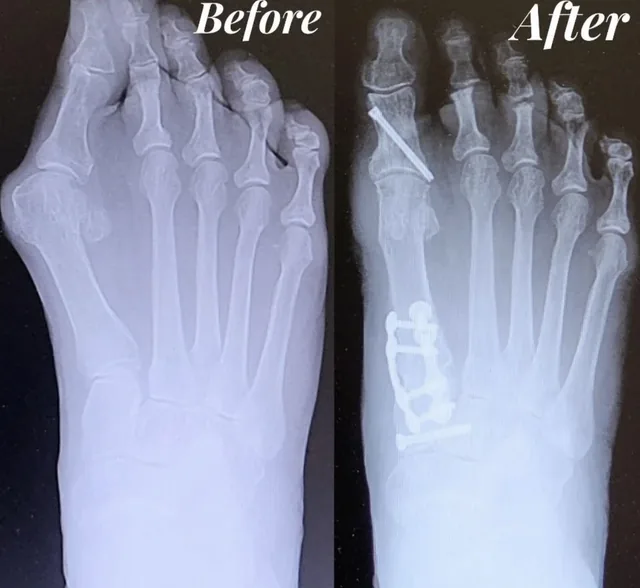 Bunion correction, before & after
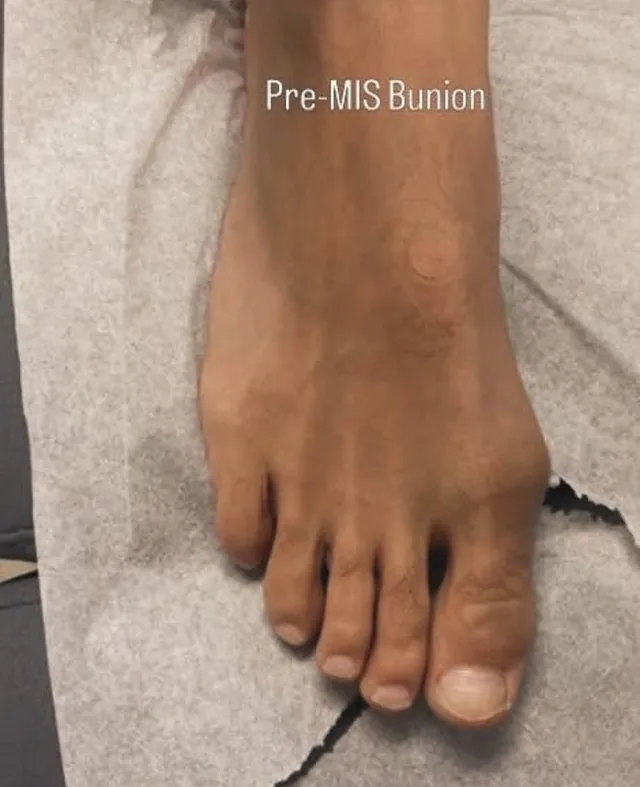 Before minimally invasive bunion surgery
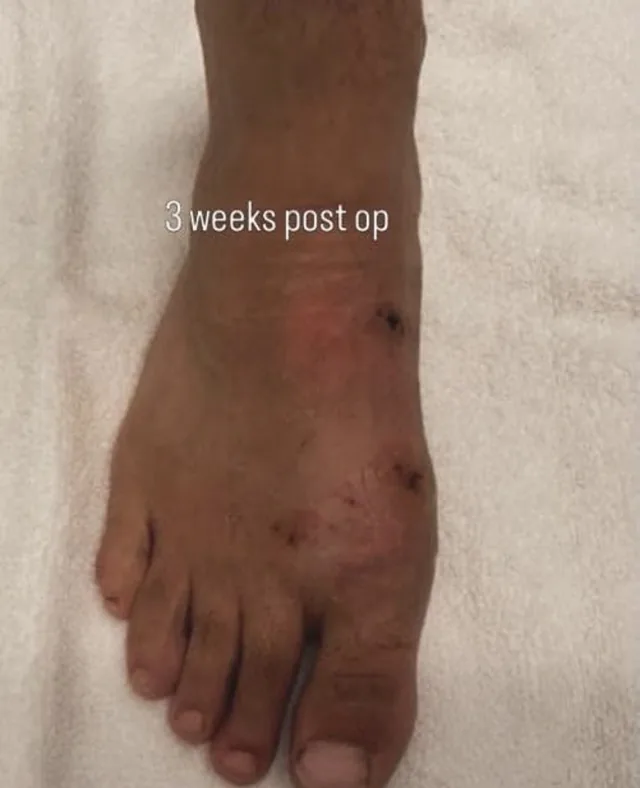 Three weeks after surgery
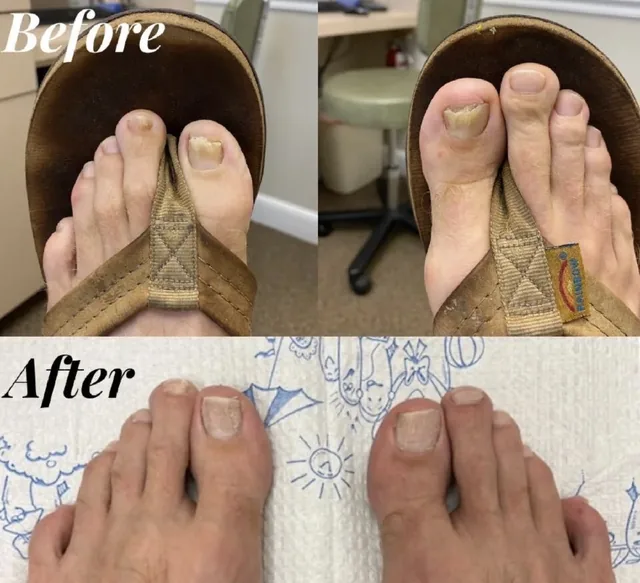 Toenail restoration progress
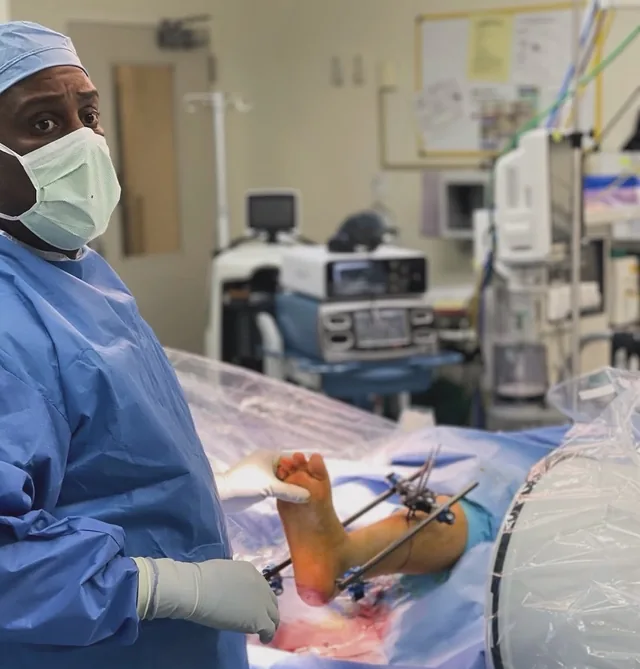 Dr. Cedeno in reconstruction surgery
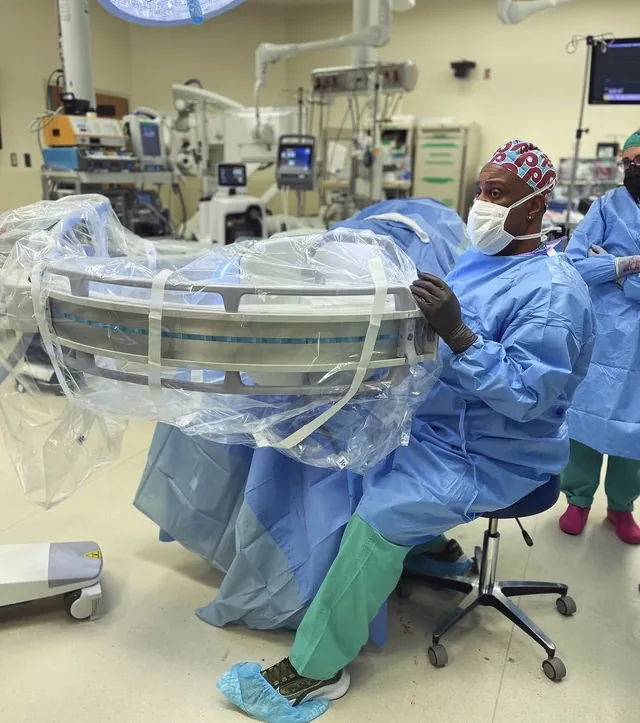 Imaging during a procedure
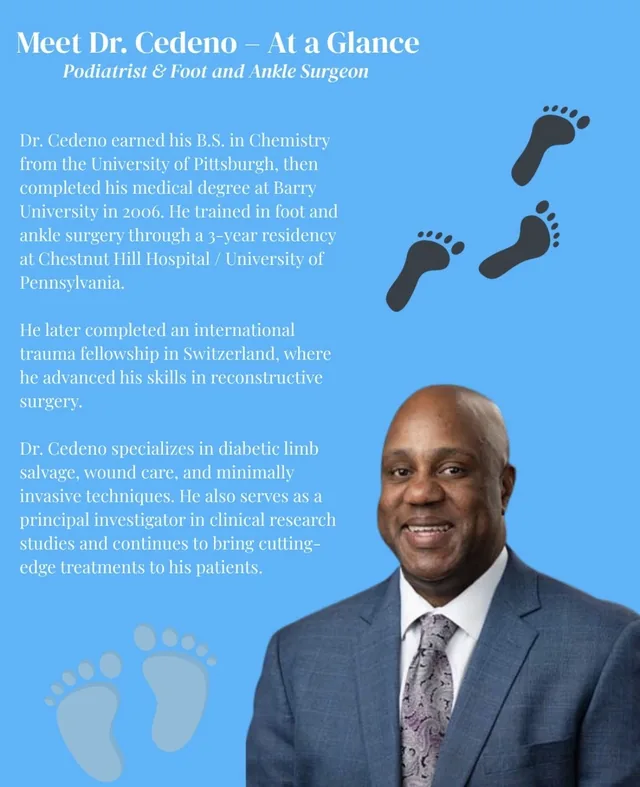 Meet Dr. Cedeno
 Regenerative care with Dr. Mustafa
Individual results may vary. Clinical images are shared with patient permission and are not a promise of any particular outcome.
Book your evaluation with Dr. Cedeno today. We'll find the real cause of your pain and build a plan to fix it.
Answers about treatments, visits & booking
Automated assistant, general info only, not medical advice. For urgent concerns call (561) 915-1934.