You’ve felt it: that sharp, bruised sensation at the ball of your foot after a few hours in heels. The burning that shows up mid-afternoon and refuses to leave. The quiet realization that walking barefoot across tile is suddenly uncomfortable — and that shoes you’ve loved for years now feel like they were designed to punish you.
You’re not imagining it. You’re not getting “soft.” Your feet are losing their natural cushion — and it has a name: plantar fat pad atrophy.
The good news: we can rebuild that cushion. At Abacoa Podiatry & Leg Vein Center in Jupiter, we offer the Foot BBL™– a minimally invasive fat-pad restoration procedure using two of the most advanced regenerative products available for the foot: Liposana™, a purpose-built allograft adipose matrix, and Sculptra, a collagen stimulating injectable. Both restore cushion without surgery, without harvesting your own fat, and without meaningful downtime.
It’s the cushion-restoration idea behind the famous Brazilian Butt Lift — reimagined for where women actually need it most: under their feet.
What Is Plantar Fat Pad Atrophy?
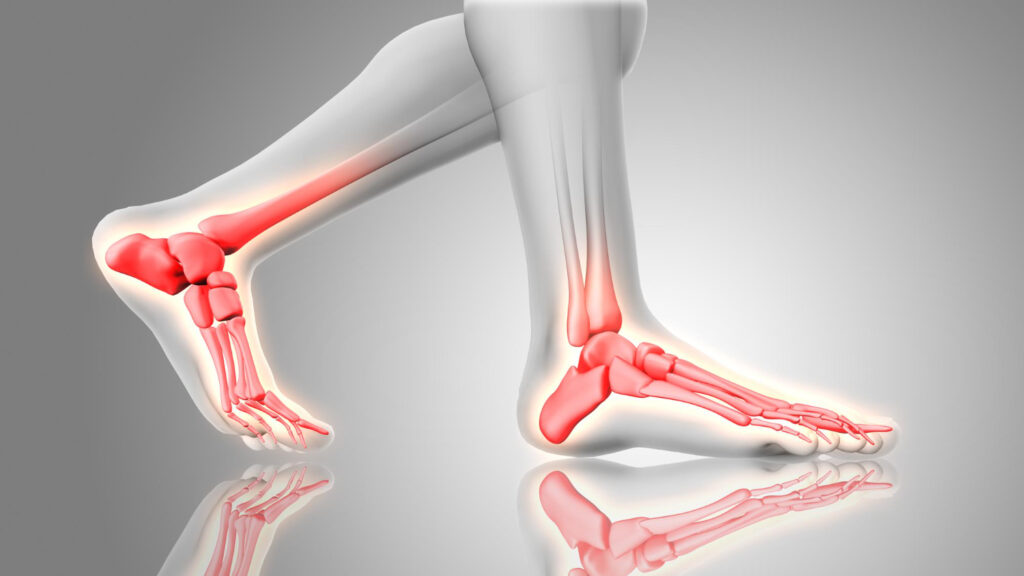
The bottom of your foot has specialized fat pads — dense, springy cushions under the heel and the ball of the foot — that absorb roughly 200–400% of your body weight with every step. Over time, those pads thin out. The fat cells shrink, the protective chambers collapse, and force that used to be absorbed by fat now transmits directly to bone.
The result is a set of symptoms our Palm Beach patients describe in strikingly similar ways:
- “It feels like I’m walking on marbles.”
- “My bones hurt when I stand on tile.”
- “I can’t wear heels for more than an hour anymore.”
- “I feel every pebble through my shoes.”
- “The ball of my foot burns by the end of the day.”
Fat pad atrophy is often mistaken for metatarsalgia, Morton’s neuroma, or “just getting older.” The distinction matters — because the fix is different, and for the first time, there’s a restorative option that addresses the actual root cause rather than just managing pain.
Why Fat Pads Thin Out: The Real Causes
Fat pad atrophy isn’t random. In our Jupiter and Palm Beach Gardens practice, we see it most often in women over 50, but it affects men and younger patients too. The most common causes:
Years of high-heel wear — decades of forefoot pressure crush the fat chambers
Aging — collagen and elastic tissue around the fat pads naturally break down
High arches or foot shape — concentrates load on a smaller area
Running and high-impact sports — repetitive pounding accelerates thinning
Prior steroid injections to the foot (a well-documented side effect)
Rheumatoid arthritis and other inflammatory conditions
Diabetes — affects connective tissue and fat distribution
Weight loss — rapid loss can reduce foot fat along with everywhere else
Genetics — some patients are simply born with thinner pads
If several of these apply to you, and your feet have started to feel bonier over the past few years, there’s a good chance you’re dealing with plantar fat pad atrophy.
“I Can’t Wear My Heels Anymore” — The Palm Beach Epidemic
We hear it constantly — from patients heading to galas at The Breakers, weddings at Club Colette, or just dinner on Clematis Street. Women who spent their 20s, 30s, and 40s in beautiful shoes are now facing a closet full of heels they simply can’t wear comfortably.
Until recently, the options were bleak: cushioned inserts, wider shoes, flats, or accepting the pain. None of those solve the actual problem — they work around it.
The Foot BBL™ is different. It replaces what time took away and restores the anatomy of the foot closer to its original state — so the shoes you love work for you again.
Introducing the Foot BBL™: Two Modern Options, One Goal
The Foot BBL™ restores cushion to the bottom of the foot using one of two leading regenerative products. Unlike a traditional Brazilian Butt Lift, there is no liposuction, no fat harvest, and no donor site. The materials are ready-to-use, purpose-designed, and delivered via precise in-office injection.
Option 1: Liposana™ — Allograft Adipose Matrix
Liposana™ is an injectable human adipose tissue allograft, ethically sourced and processed to preserve the natural extracellular matrix of fat tissue. It was developed specifically to restore cushioning in the foot.
When injected into thinned fat-pad zones, Liposana™ does two things:
- Immediate cushioning — it fills the space and functions as a biological replacement for the missing fat pad on day one
- Scaffold for your own tissue — the preserved matrix invites your body’s own cells to populate and remodel the area, building lasting cushion over time
Because Liposana™ is adipose tissue — not a synthetic filler — it behaves like the tissue it replaces. Early clinical experience suggests results that last approximately 18–24 months or longer.
Option 2: Sculptra — Collagen-Stimulating Injection
For patients who prefer a non-tissue option or whose atrophy pattern responds better to volumizing and collagen remodeling, we also offer Sculptra, a poly-L-lactic acid (PLLA) injectable that stimulates your body to generate its own collagen over time.
Rather than replacing the fat pad directly, Sculptra rebuilds the supporting framework — gradually adding structure and cushion through a series of treatments. Results develop over weeks to months and can persist for two years or more.
Which option is right for you depends on the pattern of your atrophy, your anatomy, your goals, and how you’d like the restoration to progress. We recommend one or the other — or sometimes a combination — based on your evaluation.
Neither option uses your own fat. There is no liposuction step. There is no harvest site to recover from.
What Happens During a Foot BBL™ Procedure
The Foot BBL™ is performed in-office under local anesthesia. Most patients are in and out in under an hour.
Step 1 — Consultation and mapping. We examine your feet, measure fat-pad thickness with ultrasound when indicated, and map the exact zones that need restoration. You’ll see the plan before anything begins.
Step 2 — Local anesthesia. The treatment area is numbed for comfort.
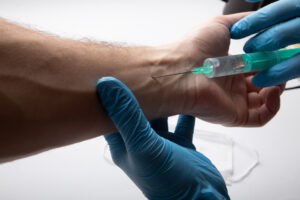
Step 3 — Precision micro-injection. Using fine needles or small cannulas, Liposana™ or Sculptra is layered into the thinned zones of your fat pad. The goal is even, anatomic cushioning — not bulk.
Step 4 — Offloading and aftercare. A soft dressing or post-op shoe is applied, and you’ll be asked to offload the treated foot for a short window to let the graft or filler integrate.
Most patients walk out of the office the same day.
Are You a Candidate for the Foot BBL™?
Ideal Foot BBL™ candidates are patients who:
- Experience ball-of-foot or heel pain that worsens with standing, walking, or nicer shoes
- Feel a “walking on bones” sensation
- Have tried orthotics, cushioned inserts, and shoe modifications without enough relief
- Are in generally good health
- Have realistic expectations about what restoration can achieve
- Want a solution that addresses the anatomy, not just the symptoms
The Foot BBL™ is not typically the right choice if you have active infection at the site, uncontrolled diabetes, severe peripheral vascular disease, or certain connective-tissue disorders. A consultation tells us quickly whether you’re a good fit.
Recovery and Results: What to Expect
One of the reasons patients love the Foot BBL™ is the recovery is far gentler than most cosmetic procedures — and because there’s no donor site, there’s nothing else to recover from.
Day 1–3: Walking with offloading (post-op shoe or soft dressing); mild tenderness at the injection sites
Week 1: Return to most daily activities; avoid prolonged standing and high-impact exercise
Weeks 2–4: Transition back to normal footwear; most patients are fully active
Weeks 4–12: Final volume and cushion settle as tissue integrates (Liposana™) or collagen builds (Sculptra)
Month 3 and beyond: Full results — noticeably more padding, less pain, and for many patients, a return to shoes that hadn’t been wearable in years
How Long Do Foot BBL™ Results Last?
Liposana™ Foot BBL™: Early clinical experience suggests 18–24 months or longer before a refresh is considered. Because Liposana™ invites your own tissue to remodel the area, many patients extend the benefit well beyond that window.
Sculptra Foot BBL™: Results build over a series of sessions and typically persist two years or more. Because Sculptra stimulates your body’s own collagen, the foundation it builds can continue to provide structure long after treatment.
Both options are refreshable. Most patients plan for a maintenance visit every 18 months to 2 years.
Cost of the Foot BBL™ in Palm Beach County
The Foot BBL™ is generally an out-of-pocket cosmetic and quality-of-life procedure — insurance does not typically cover it, though select cases involving documented medical problems (diabetic pressure issues, for example) may qualify for partial coverage.
We provide transparent pricing at consultation, with financing options through CareCredit and similar programs. Pricing depends on:
- Whether Liposana™, Sculptra, or a combination is recommended
- How many zones are being treated (one foot vs. both, forefoot vs. heel vs. both)
- The volume of product required for your anatomy
Think of it as an investment in the part of your body that literally carries you through every day.
Why Patients Choose Our Jupiter Office for the Foot BBL™
Patients come to Abacoa Podiatry & Leg Vein Center from Jupiter, Abacoa, Palm Beach Gardens, Palm Beach, Tequesta, Juno Beach, and throughout northern Palm Beach County for a specific combination of expertise that’s hard to find under one roof:
A board-certified podiatric surgeon — Dr. Orlando Cedeno, DPM, FACFAS — performing the procedure, not a technician
Deep foot-and-ankle anatomical expertise — the Foot BBL™ is performed by a physician who specializes in the foot, not an aesthetic practitioner who occasionally works on feet
Both Liposana™ and Sculptra options available in one practice, so your procedure is matched to your anatomy and goals
A full regenerative medicine suite for patients who want to combine the Foot BBL™ with other therapies (PRP, peptides, biologics)
Transparent, concierge-level pricing and planning
Convenient Jupiter location with an atmosphere designed for patients who expect a premium experience
We treat the foot not just as a mechanical structure, but as an aesthetic and functional part of the body that deserves the same thoughtful care as the face.
Schedule Your Foot BBL™ Consultation in Jupiter
If you’re tired of heels collecting dust, tile floors hurting to walk on, or feet that ache by the end of every evening, the Foot BBL™ may be the answer you’ve been waiting for.
📍 Abacoa Podiatry & Leg Vein Center — Jupiter, FL 🌐 www.jupiterlaser.com 📞 561-624-4800
Book your Foot BBL™ consultation →
Frequently Asked Questions About the Foot BBL™
What is a Foot BBL™? The Foot BBL™ is a minimally invasive fat-pad restoration procedure that uses Liposana™ (an adipose tissue allograft designed specifically for the foot) or Sculptra (a collagen-stimulating injectable) to rebuild cushion on the bottom of the foot. It addresses plantar fat pad atrophy — the thinning of foot fat pads that causes ball-of-foot pain and a “walking on bones” sensation.
Does the Foot BBL™ use my own fat? No. Unlike a traditional Brazilian Butt Lift, the Foot BBL™ does not use your own fat and does not require liposuction. Liposana™ is a ready-to-use human adipose allograft, and Sculptra is a collagen-stimulating injectable. There is no donor site and no harvest recovery.
Is the Foot BBL™ painful? The procedure is performed under local anesthesia and is well tolerated. Most patients describe mild tenderness at the injection sites for a few days afterward.
How quickly will I see results? With Liposana™, many patients notice improved cushioning within the first few weeks, with final results settling at 8–12 weeks. Sculptra results build more gradually over a series of treatments as collagen develops.
Will I be able to wear heels again? For most Foot BBL™ patients, yes. The procedure restores the protective padding that makes heeled shoes wearable. Individual results vary, and we’ll discuss realistic expectations at your consultation.
Is the Foot BBL™ safe? Both Liposana™ and Sculptra are well-established products used by physicians nationwide. Performed by a board-certified foot-and-ankle surgeon who understands the unique anatomy and biomechanics of the foot, the Foot BBL™ carries a strong safety profile. We’ll review your personal risks in detail at consultation.
How long does recovery take? Most patients walk out the same day with a soft dressing or post-op shoe, return to most daily activities within a week, and are fully active within 2–4 weeks.
How much does the Foot BBL™ cost? Pricing depends on which product is recommended, the number of zones treated, and the volume required. We provide full transparent pricing at consultation, along with financing options.
Is the Foot BBL™ covered by insurance? The Foot BBL™ is generally considered a cosmetic and quality-of-life procedure and is not typically covered by insurance. Exceptions may apply for specific medical indications.
Where is the Foot BBL™ performed? In our Jupiter, FL office — no hospital or surgery center required. Patients travel to us from throughout Palm Beach County and the Treasure Coast.
Medically reviewed by Orlando Cedeno, DPM, FACFAS — board-certified podiatric
surgeon and founder of Abacoa Podiatry & Leg Vein Center in Jupiter, FL. This article is for educational purposes and does not replace a medical evaluation. Individual results vary.
Foot BBL™ is a trademark of Abacoa Podiatry & Leg Vein Center. Liposana™ is a trademark of its respective manufacturer. All rights reserved.